
West Virginia Restorative Justice Project
We are a non-profit organization in West Virginia dedicated to supporting our communities in bringing restorative justice resources to everyone, expanding RJ in the state. We are a volunteer-run organization. We were founded as an informal organization in 2021 and in 2024 incorporated as a non-profit organization in West Virginia.
Follow us on social media!

Advisory Committee
Jim NolanCathy Grewe
Hon. Michael John Aloi (returning member)
Rev. Ronald English (returning member)
Taylor Graham
Erin Gaertner
Amber Blankenship
Deborah L. McHenry
Beth Currence
Durand Warren
Wendy Baraka
Teri Castle
Tim Dipiero
Kara Fisher
Lara Foster
Kenny Matthews
Annie Myers
Erin SheltonK
Kim Tyler-Sterling
Board of Directors
Gregory Robertson
Nicole Bailey
Nic Cochran
Debra Murphy
Lida Shepherd
Rose Hefner
Corporate Volunteer
We are grateful to Marti Kerner with Springahead Media for her assistance to our organization in providing email marketing services to us since 2024.
Officers of the Board of Directors
-

Lida Shepherd
President, Board of Directors
Co-director WV Economic Justice Project; American Friends Service Committee and President of the Board of Directors
“I believe restorative justice is a paradigm shift where punishment is no longer our first response to harm. And instead we see that harm is not simply about individual wrongdoing, but often stems from our collective failures as a society. Restorative justice demonstrates our interconnectedness.”
-
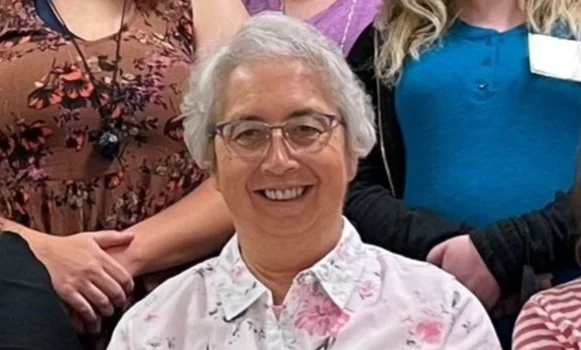
Rose Ann Hefner
Secretary, Board of Directors
Sister of St. Joseph; Restorative Justice Practitioner at American Friends Service Committee
“Having worked in prisons and with justice impacted people, I value using restorative justice as a way to help people take responsibility for their actions, heal relationships and build community, as well as help end the school to prison pipeline. I believe the circle process can help bridge the divides in our culture and help people build understanding with one another in our schools, churches, and community settings.”
-

Dr. Debra Dean Murphy
Treasurer, Board of Directors
Professor of Religious Studies; Chair of the Department of Philosophy and Religious Studies; Co-Director at Center for Restorative Justice at West Virginia Wesleyan College and Treasurer of the Board of Directors
WEST VIRGINIA RESTORATIVE JUSTICE PROJECT
Where We Are & How We Got Here
“We are all one, intrinsically connected to one another, and benefit from an increased understanding with one another.” — WVRJP founding principles
How It Began
The story of the West Virginia Restorative Justice Project doesn’t begin with an organization. It begins with a conversation — or rather, with many conversations happening in different corners of the state at roughly the same time, among people who had never yet met each other.
As early as 2018, the American Friends Service Committee was holding listening sessions for justice-impacted people across West Virginia. Those sessions stirred questions about restorative justice — what it was, whether it could work here, who might carry it forward. Over the next two years, pockets of activity emerged independently: discussion groups, educational screenings, community panels. In February 2020, a two-day event at Wheeling University on “Restorative Justice and the Abuse Crisis in the Catholic Church” drew 100 participants and brought nationally recognized voices into dialogue with West Virginians — among them retired Wisconsin Supreme Court Justice Janine Geske and Father Dan Griffith, Liaison for Restorative Justice and Healing for the Archdiocese of St. Paul-Minneapolis.
Then the pandemic arrived and, paradoxically, created opportunity. Circle practice moved online, and that opened a door.
The Kay Pranis Circles, 2020–2021
In May 2020, and again in May 2021 through West Virginia Wesleyan College, restorative justice practitioner and author Kay Pranis led online circle trainings that drew together a committed group of West Virginians. Those circles were not just training exercises — they were the beginning of a community. Debra Murphy, Lida Shepherd, and Sister Rose Ann Hefner were among those who found each other there. The group kept meeting monthly after the trainings ended, a kind of ongoing support circle, holding a shared question: what could a West Virginia restorative justice project look like?
In March 2021, Professor Debra Murphy wrote the project’s first Letter of Inquiry for a Generous Promise grant from the Congregation of Sisters of Saint Joseph. The project — initially housed administratively through West Virginia Wesleyan College — received two grants from the Sisters: a startup grant and a Generous Promise grant. Lida, Debra, and Sister Rose were, as one of them put it, simply “wanting to begin a WV RJ Project.” And so they did.
The Early Years, 2021–2023
November 2021 | "Reimagining Justice in WV: A Virtual Conference on Restorative Practices"
The project’s first major event, hosted online with support from the American Friends Service Committee. Speakers included Howard Zehr — widely considered the grandfather of modern restorative justice — Kay Pranis, and Ash Lee Henderson from the Highlander Center. Howard Zehr and Rev. Ron English held a public conversation that many participants described as formative. Education panels featured Dr. Shenequa Smith, Alyssa Mick (Hancock County), Cathy Grewe, Misti Southern, Brenda Waugh and Meg Squire. This conference established the project’s reach and set a tone of both rigor and welcome that has defined its events ever since.
Spring 2022 | Advisory committee expands; part-time director hired
Judge Michael John Aloi and Brenda Waugh were invited to join the advisory committee alongside Cathy Grewe, Rose Ann Hefner, Debra Murphy, and Lida Shepherd. In April 2022, a notice went out to hire a part-time project director; Emily Neely was hired.
July 2022 | NDWV Drug Court Restorative Justice Training — Clarksburg
Funded by the West Virginia Bar Foundation, this day-and-a-half training brought restorative justice directly into the Northern District drug court system for a select group of peer recovery coaches. Dr. Kenneth Lang, Brenda Waugh, and Marti Steiner Unger led a full curriculum covering circle practice, victim-offender conferencing, re-entry circles, and trauma-informed approaches. Judge Aloi fully participated in the design of the program and led the closing circle. It was the first time the project worked directly and in a sustained way within the formal justice system.
2022–2023 | In-person trainings and community events across the state
The project co-sponsored two in-person trainings in Lewisburg, one geared toward community and courts and another toward education, drawing over seventy participants. Brenda Waugh continued providing trainings for peer recovery coaches and community groups throughout the state. The project also produced several online webinars reaching approximately 100 registrants each, including “How Restorative Justice Strengthens Communities” and “What is Happening with Restorative Justice in West Virginia.”
July 2023 | Advanced NDWV Training — Clarksburg (second year, Bar Foundation-funded)
This follow-up training brought back the original drug court coaches for advanced workshops and expanded to include participants from REACH, SOAR, and other community organizations. The relationships built across these two years of Clarksburg training became a direct pipeline into the planning committee and attendance at the 2024 Summit.
November 2023 | Webinar: “Restorative Justice: What West Virginia is Talking About!”
Held during National Restorative Justice Week, this online event showcased the breadth of restorative work already underway in West Virginia. The advisory board also collaborated on a short explainer video, “What is Restorative Justice?” which continues to serve as an introduction for newcomers to the project.
A Year of Milestones: 2024
By 2024, the seeds planted in those early circles had grown into something broader. Two events that year marked genuine turning points.
West Virginia Restorative Justice Summit — June 14–15, 2024, WVWC, Buckhannon
The Summit was the largest and most diverse restorative justice gathering ever held in West Virginia. Over 125 people traveled to the campus in Buckhannon — recovery coaches, counselors, judges, lawyers, law students, first responders, social workers, teachers, faith leaders, and citizens who simply wanted to understand what restorative justice was. Keynote speaker Valerie Slater, executive director of the RISE for Youth Coalition, opened the two-day program. Restorative justice figures Howard Zehr and Barb Toews joined via video conference, including an interactive exhibit by Toews and Zehr on their project “Still Doing Life.” Thirty breakout sessions gave participants hands-on experience in circles and restorative dialogues.
For many attendees it was their first direct experience of a restorative process. The relationships formed across those two days, between people from different counties, professions, and life experiences , were the whole point. The Summit was organized primarily by volunteers, with one paid contractor for coordination, and demonstrated that West Virginia had not just a curiosity about restorative justice but a genuine appetite for it.
National Restorative Justice Week Statewide Circles — November 20, 2024
On a single evening in November, seventeen concurrent talking circles opened simultaneously across West Virginia, from Berkeley County in the Eastern Panhandle to Fayette County in the south, across more than fifteen separate locations. Each circle was led by a WVRJP-trained keeper following shared protocols. The event was free. All venues participated in a short zoom meeting where they were able to observe the excitement in each community and hear from speakers about Restorative Justice and Talking Circles. Nearly 250 people registered. It was organized entirely by volunteers and came in under its projected budget. Some local keepers began hosting circles on their own initiative afterward; others asked immediately about training to become keepers themselves.
Becoming an Organization: Late 2024
For its first three years, the project existed informally, with finances flowing through West Virginia Wesleyan College and governance resting with a small advisory panel. That changed in the final months of 2024.
In December 2024, the founding members formally established the West Virginia Restorative Justice Project as a 501(c)(3) nonprofit organization, incorporated in West Virginia and recognized by the IRS as tax-exempt. The initial board of directors was constituted with Lida Shepherd as president, Rose Ann Hefner as secretary, and Debra Murphy as treasurer. The organization now has its own bank account, tax ID number, and by-laws. The first formal board meeting was held December 12, 2024. Brenda Waugh accepted the role of volunteer executive director. Mailing address: P.O. Box 204, Dellslow, WV 26531.
Effective June 12, 2025, the board expanded significantly with new members. Marti Kerner of Springahead Media joined as a corporate volunteer providing email marketing services — a contribution that has made the organization’s communications substantially more consistent and professional.
2025: Building Capacity
The year 2025 focused on deepening the project’s capacity: stronger facilitation skills across the network, new connections to practitioners working in other contexts, and a new home within legal education.
March 6, 2025 | Webinar: “How Does Restorative Justice Make Our Communities Stronger?” — featuring Debbie Watters
Greg Robinson, Nicole Bailey, and Amber Blankenship facilitated a conversation with Debbie Watters, co-director and founder of Northern Ireland Alternatives (NIA), a government-accredited restorative justice program that addresses low-level crime and antisocial behavior in communities across Northern Ireland. Many participants found her account of practicing restorative justice in a deeply divided society both moving and directly relevant to their own work in West Virginia. The webinar was free and open to all.
June 2025 | Restorative Justice Skills Building Institute — WVU College of Law, Morgantown
Hosted at the West Virginia University College of Law, this full-day institute brought approximately 80 participants, ranging in age from 17 to 77, from Wheeling to Williamson and Martinsburg to Parkersburg, and from neighboring states, for two half-day workshops. Judge Wesley Saint Clair (King County, Washington, and recipient of the Martin Luther King Jr. Humanitarian Award) led the morning session on circle keeping. Tracey Battle, an adjunct professor at Bowie State University with extensive experience in restorative processes in Washington, D.C. schools, led the afternoon session on victim-offender dialogue facilitation.
The program was approved for 7.8 Continuing Legal Education credits by the West Virginia State Bar and 7 CEUs by the West Virginia Certification Board for Addiction and Prevention Professionals. In a closing activity, the full group spontaneously began moving through the room together and stopped together within seconds, without a word or signal, a moment one participant described as an experience of what Martin Luther King called the “beloved community.”
November 17, 2025 | Second Annual Statewide Talking Circles — National Restorative Justice Week
Building on the success of the 2024 event, the project convened its second annual statewide circle event, expanding to over twenty concurrent circles across the state. The model remained similar to the 2024 circles: trained local keepers, shared protocols, a brief online orientation, and communities gathering to listen to one another. Free for all participants.
2026: Deepening the Practice
The first half of 2026 brought one of the most significant training events in the project’s history.
March 20–22, 2026 | Weekend Intensive Circle Keeper Training with Kay Pranis — Cedar Lakes Conference Center, Ripley
The project brought Kay Pranis, the internationally recognized circle keeper and author whose online trainings in 2020 and 2021 helped give rise to the WVRJP, back to West Virginia for a weekend-long residential training. Held at Cedar Lakes Conference Center in Ripley, the event drew 25 participants selected from a pool of applicants, with priority given to geographic, professional, and experiential diversity. The WVRJP subsidized half the $500 per-person cost. The training filled completely. This event represents the deepest circle-keeping training the project has offered to date, and the practitioners who completed it will carry that capacity into communities across the state for years to come.
The 2026 Summit — Postponed to 2027
A second West Virginia Restorative Justice Summit had been planned for 2026 at the WVU College of Law in Morgantown. After careful consideration, the board made the decision to postpone it to June 18, 2027, at the same venue. This allows more time to plan an event that reflects the growth of the network since 2024.